Showing posts with label 4Ms. Show all posts

Monday, November 28, 2022

Wargame Design - Avoiding Melee Yahtzee


Everyone knows that the basics of wargame design are the 4Ms.  Those stand for: 
  • Movement
  • Missiles
  • Melee
  • Morale
I have spoken about the 4Ms and individual aspects of the 4Ms at various times on the blog.  However, as a designer one of my big fascinations is how to effectively deal with Melee as one of the 4Ms.  In many genres, Melee is the great "decider" and is the crucial mechanics for the period or genre.  That weight of decision for the game should come from Melee.  

Yet, despite the importance of it I have found Melee is often the anti-thesis of fun and instead simply bogs down into a game of Yahtzee where you roll and pray for a better dice roll.  The core of good game play is decision making, and in many games once you get into Melee there are no decisions to make.  As a player, you simply completing the mechanical process of the game to get a result, so you are not playing the game.  The game is playing you. 

The Problem of Melee
To understand why Melee devolves into Yahtzee, we need to understand what is happening and why decision making is stripped from the game once Melee begins.  Here are some common mechanics that I see that strip decision making from the player.  

1. Decisions are made at a Strategic Level
The Strategic Level of a game is decision making that occurs before you even get the miniatures on the table.  This is primarily seen in list building or equipping your models for play.  These choices are made  "Out-of-Game" and the results of these choices impact the game in motion.  However, they do not necessarily allow a player to make a choice at the tactical, or in-game level.  

For Example, Chosen Men from Osprey is a good example of this.  Initiative order for combat is based on what weapons a model is equipped with.  If a model strikes before another and kills them, the enemy is removed and can not strike back.  Therefore, if a player chooses to equip a model in the Strategic list building in a certain way, it will have an impact during the game.  There is no decision by the player on who strikes who when.  

2. Melee Locking
This was an early and common aspect of Melee.  Once a close combat was initiated, it was assumed that both combatants would stay in combat until one of them was dead or incapacitated.  In this scenario, the key decision was when to join combat or not.  Therefore, once the decision to engage was made, there were no further decisions to be made in combat.  Instead, you just roll the dice and see who is left standing.  

Necromunda featured Melee Locking

3. No Options
Melee is often a stat driven activity.  Players had no actual options in combat other than to attack.  There simply was no decisions to be made.  Only dice to roll.  The person with the better Yahtzee roll won.  There were no options to feint, knock prone, parry, etc.  

4. To The Death
Melee was always to the death.  There was only one outcome available once melee was engaged.  One side would win and continue being operational, and the other would lose and be removed from play.  No other outcome was permitted.  Models or units could not disengage, fall back, retreat, or even take moral tests.  They were either killed or not killed.  

5. Comparing Dice
A lot of games have players simply compare dice and select "the best" to win.  There is very few ways to alter or modify how these dice rolls are used or applied.  It is a winner take all type of system, with only the RNG having a say in the results.  

Those are some of the key reasons why Melee has always seemed a bit of an uninspiring portion of many games.  I won't claim to be any better on this front.  In many of my games, Melee is "streamlined" with many of the problems I just outlined above!  However, this has also led me to think long and hard about how to make Melee more interesting.  You can see the evolution of my thinking in my games as well.  
Comparing Dice in The Walking Dead

Choice is Needed in Melee
Surprise, surprise.  I have frequently said that the key to good games is to force meaningful choices on the player.  Melee should not be exempt from this simple maxim.  In this case, I am specifically referring to Tactical or "On-the-Table" choices.  Players need options to execute in Melee to make things more fun!   

The following are some methods or ways to achieve choice during Melee: 

1. Remove Locking
Instead of models getting locked in combat, allow them to move freely in and out of Melee as needed by the player.  This gives the player a choice on whether they want to stay fighting, or leave when it no longer suits their needs.  

2. Attack/Defense Options
There are a variety of ways to do this depending on the genre and scale.  However, it is essentially providing different options to attack that force trade-offs on the player.  The player decides the attack or defense options and this has positive and negative connotations/mods on how the Melee is resolved.  The most common examples are parrying, feints, big strikes, etc. 

These could also be granted by equipment choices, but in game the player opts to use the special benefits or options instead of them automatically applying.  For example, a shield may allow a parry attempt, but at the cost of offensive ability in return.  You can opt to use the shield or not during the game itself!     

3. Critical Options
Instead of a Critical success just doing more damage, give the player more options on how to "cash-in" or use the Critical to gain advantage or chain success together.  Instead, of just doing damage, perhaps it also allows a push, or similar mechanic.

A Steggie can only swing its tail behind and to the side in Only The Strong Survive

4. Positioning
Instead of simply using Base-to-Base as good enough for combat, you could add Mods and penalties for facing and direction when a model is engaged.  This essentially is ranks and flanks with associated maneuver benefits applied on a unit or model level.  This also applies to how models support each other in melee as well.     

5. Not Always Deadly
Provide ways for a player to win a combat that does not involve death and dismemberment.  This could be maneuvering for position, breaking from combat, pushing back. following up, or something more exotic.  

In A Fistful of Kung Fu you can choose to "humiliate" your opponent with a suitable melee success instead of damaging.  This has Victory Point implications in the end game, and allows a bit of narrative flair! In Dracula's America you can convert success into a push that can be used to knock people off mounts, over cliffs, and out of cover.  

6. Force Moral in Melee
People rarely fight to the death.  When possible, they will attempt to flee from close combat.  Allow ways to drive off an opponent without killing them outright.  Morale is one of the 4Ms and should apply to Melee as much as it does or more to Missiles.  

Outremer has an interesting mechanic where in order to charge or engage in close combat, you must pass a Morale check first!  This represents a persons natural reluctance to engage in melee to begin with.  

7. RNG Manipulation
Create mechanics that allow the player to "manipulate" or shift around the results of the RNG.  This could include using them to cancel out an opponents dice, trade-in for re-rolls, swap results, or choose how they are applied on a chart.  This allows a player to make decisions about how the results are actually applied or used in game.  

Survivors face a Martian Tripod in melee during a game of Under the Martian Yoke

Final Thoughts
There are a ton of genres and game styles where Melee is the most important aspect of the game.  Therefore, those games require a greater depth of mechanics and decision making to make the genre fun!  Melee should not be boring and have more depth and interest than a game of Yahtzee!  Thankfully, there are a number of ways to add meaningful decision making to Melee.  Like all aspects of the game, it is about adding choice for the player that have meaningful impacts to the game down stream.  


Become a Patron and get access to all the cool stuff, a peak behind the curtain of Blood and Spectacles, and early-access to playtest games!  


You can follow Blood and Spectacles Facebook page or Instagram for more fun! 

Check out the latest publications and contact me at our Blood and Spectacles website

Or purchase all out games at the Blood and Spectacles Publishing Wargames Vault Page!    


Monday, May 17, 2021

Wargame Design: Creating Meaningful Choices


This blog frequently states as a matter-of-fact that the key of good game design is to create meaningful choices for the player.  However, less frequently do I talk about what this means as a matter of game design!  I have hints and clues about it in some of my posts about Creating Tactical Game Play, the 4Ms, Creating Hooks, Fleshing Out the 4Ms, Deployment is a Choice etc.  However, let's talk specifically about creating choice in your designs.  

To get started, we must first define what a meaningful choice is.  Choice is a decision that a player must make.  However, there are plenty of choices that do not lead to any appreciable difference in game play.  For example, if a model can choose to use a shoot action every turn, then the decision is simple what are they going to shoot.  There is really no "choice" about using the ability to shoot to actually shoot.  

Instead, a meaningful choice is a choice that has actual impacts to game play.  So, to continue the above example with the Shoot action it becomes a meaningful choice when there is an impact to the choice.  In the above example, a model can choose to shoot every turn.  However, by choosing to shoot they can not take other actions.  Now, choosing to shoot becomes a meaningful decision.  It is no longer a "no-brainer" to shoot as you will only want to shoot when there are not other actions to take.  Shoot or No-Shoot has now become a "meaningful decision" 


Meaningful Decision = Downstream Impact to the Game


Meaningful Decisions are ones that force a player to decide what is the "best course" of action based on what is happening in the game.  Choices made during the course of a game are "Tactical" decisions where choices made outside of the course of the game is a "Strategic" choice.  Ideally, Tactical and Strategic choices join in a single game system to allow for a maximum amount of choice.  Today though, we will be focusing on Tactical Choice. 


How Do You Create Meaningful Tactical Choice? 

This is the $64 Thousand dollar question.  Unfortunately, it is not a cut and dry answer.  However, the easiest way to think about it is that choices need consequences.  Consequence free choices are boring and easy to make.  There must be trade-offs.

(Positive Outcomes / Negative Impacts) + Downstream Impacts to the Game = Meaningful Choice

The Positive Outcomes are the meat of most mechanics.  You shoot someone, you engage in melee, you force them back etc.  The Negative Outcomes are not always as clear.  The Downstream Impact to the game is whatever happens actually changes how the games outcome was moving.  That is a meaningful choice. 

Positive Outcomes are straight forward, they are what the player actual wants to have happen.  It is the Negative Impacts that are harder to determine.  Here are some idea.    

1. Firepower vs Maneuver

The Futility of Realistic Weapon Ranges discusses one of the key things to think about.  You must juggle the balance between firepower and maneuver.  Where a player chooses to go must have an impact in how the game is played.  Otherwise, they will always take the shortest route to the win condition.  This is the logical course to follow, unless there are reasons not too.  

Generally, that reason is that enemy firepower will stop you from following the straightest course.  Therefore, there needs to be an interaction between how far models can move, how far weapons can fire, and how do you reduce an enemies firepower.  

Some ways to add complications is by adding terrain, adding modifiers to ranges, and/or creating areas where firepower can not be deployed due to fire arcs.  Therefore, players then need to make choices about how they will interact with these complications to achieve the objective.  

The rules will help facilitate these decisions.  For example, models with a 360 degree fire arc can see all around them.  There are no blind spots for them.  This means how you choose to face a model has no impact or repercussions.  To add tactical decisions, you can reduce their fire arc to 180 degree forward.  Now, enemies can approach in "safety" from their firepower on the flank and rear.  Now, a player has to think about and decide where to position their model to minimize the danger from an approaching enemy.  

2. Objective vs Force Capabilities

Games must have alternate win conditions besides simply killing the enemy.  Without Objectives, opponents will simply close to optimum firing range and blast away at the enemy.  There is no meaningful tactical choice in this situation.  The solution is "solved" at that point and there are no decisions, only determining outcomes.   

Objectives give forces a reason to act and react to each other.  Objectives force players to decide how best to accomplish their missions.  They normally can not just sit and wait for their enemies to wander into their line of fire.  Instead, they are forced to move towards the Objectives while avoiding the enemies actions.  You now have a situations where decisions matter. 

For example, if you need more opponents than your enemy within X distance of point A; how do you secure it?  Does your whole army move up and stand on it?  Do you send some forward to tie up your enemy from even getting to the objective?  How much of it do you send forward?

The answer to your objectives should not simply be to "kill" all your opponents on the board. 


3.  Outcomes Vs Bad Consequences

Good decisions should not be a free gimme or a "solved" issue.  Interesting choices need trade-offs and consequences.  Therefore, if you choose to do X, then that means you can not do Y.  You then need to evaluate which is better in any given situation, do you chose X or Y.  If a decision is consequence free, it is not an interesting decision.             

A consequence doesn't need to be mechanically bad, such as implying negative mods or worse probabilities.  Instead, they could also be restrictions or a requirement to test where none existed before.  These are also consequences that can apply to a decision. 

For example, in Heirs to Empire if you move your light cavalry to open order they can turn and wheel freely, but they are treated as Disordered which gives penalties in combat.  Getting into and out of Open Order requires a command point to be spent from a limited pool.  Is the ability to freely move worth the penalties?  In some situations yes, and others no.  Therefore, you have a tactical decision with consequences. 

Decisions must have consequences, both good and bad.   


4. Limitations of Action

As a commander, you simple can not do everything you want to do in a turn.  These limitations could be based on how a turn is structured, activation methods, resource management or mechanics driven.  However, no matter the method, they all make it so a commander can not just "do" whatever they want.  

Some examples: 

In Blucher, it takes Momentum Points to move.  Once you are out of Momentum Points you can no longer move your forces.  

Blood Bowl, You can act until you fail a roll.  Then play goes to your opponent, even if your team needed to do more things that possession.  

Black Ops, has models that activate only when a card is pulled for them.  Therefore, they can not always react at the best time. 

Reality's Edge, each model makes an activation check.  if passed they can do two actions, but it failed they can only do 1.

As you can see, these limits help define the game.  How you can operate within these limits dictate how you play and your tactics.  These limitations are what imposes a decision point.  Without these limitations, there would be fewer meaningful decisions in the game.  


Final Thoughts

One of the key aspects of a good game is to create decision points, but they must be Meaningful Choices.  Such choices can be viewed as a simple equation when you are building out the 4Ms or Chrome in your game.  

(Positive Outcomes / Negative Impacts) + Downstream Impacts to the Game = Meaningful Choice

Meaningful choices and decisions can not happen in a vaccum.  There must be good and bad and they must have downstream impacts for the game.  There is a simple maxim in RPGs, if rolling a dice does not add anything to the story, do not have a player roll a dice.  The same is true here.  If a decision point is not meaningful, do not leave space for a decision.  

It is not as easy as simply writing a list of things that are or are not "Meaningful Decisions" as they will vary a lot based on your game.  The above are some guidelines to get you started.  However, if you apply the simple formula to decision points in your game, you will soon be able to tell if you are creating Meaningful Choices for game play.   


You can follow Blood and Spectacles Facebook page for more fun: https://m.facebook.com/pg/BloodandSpectacles/posts/?ref=bookmarks&mt_nav=0

Or our website:

Or our Messageboard:

Or our Wargames Vault Page:

https://www.wargamevault.com/browse.php?keywords=blood+and+spectacles&x=0&y=0&author=&artist=&pfrom=&pto=      

Monday, November 26, 2018

Wargame Design: Profiles and Chrome


Through this series, we have been exploring the '”evolution” of a game system from the initial concept, to filling out the 4Ms, to the turn sequence and activation process. The Concept and design parameters are the heart of the game. The 4Ms are the skeleton while the activation process is the muscle and sinew.

Today, we are going to be talking about the next step which is building out the units profiles and then adding the chrome. To extend the the metaphor, Unit Profiles are the nervous system of the game. Meanwhile, the Chrome is all the additional elements that make your game stand-out and give it that special hook, that “little something” that make people really want to play it.


Putting Together the Basic Profile
If you go back and re-read the section on the 4Ms and the Activation process, you will see that the basic unit profile is pretty well sketched out for us. All the building blocks are there as every profile needs to be able to talk through the stat lines to make the 4M's possible. So, let's break down a unit profile for Only the Strong Survive from there first, and then we can talk through filling it out.

Looking back, we can see that movement was going to be based on a movement template process where a Dinosaur can be Slow, Normal, or Fast. Therefore, we all ready know the first step on the unit profile is the Dinosaurs speed. In addition, I want to add a shorter band to the template called engagement range, dinosaurs at or inside this distance can fight. The initial 4M's were unclear on this process.

We also talked about a dice pool that would deplete as it was used. There were three main needs from this dice pool, Attack, Defense, and Reactions. Players could allocate dice into these areas, but once used they were gone until they replenished at some point in the game. Therefore, we will probably need a maximum number to be allocated per turn. That means we have 4 stats for the stat line all ready.

The 4Ms also referenced an Armor value where hits needed to exceed this amount to stick on the dinosaur and reduce its damage track. Therefore, we need two more stats for the Profile, armor and a damage track. Our desired Act/React system was predicated on rolling reaction dice and successes would allow you to react in certain ways. Therefore, we need a reaction chart four our profile as well.

Lastly, we talked about dinosaurs have different attacks in different arcs. After all, a T-rex can not chomp on something behind it. That means we will need to list out some unique attacks and their combat arc at least. Therefore, the basic profile would look something like the following:

  • Dinosaur Type:
  • Speed:
  • Instinct Dice:
  • Attack Max:
  • Defense Max:
  • Reaction Max:
  • Damage Track:
  • Reactions:
  • Attack Types:

The profile was all driven by the needs of the 4Ms. Therefore, without the understanding of your games 4Ms, you would not be able to make the profile. In addition, we verified earlier that the 4Ms we discussed align with our design goals. Good.
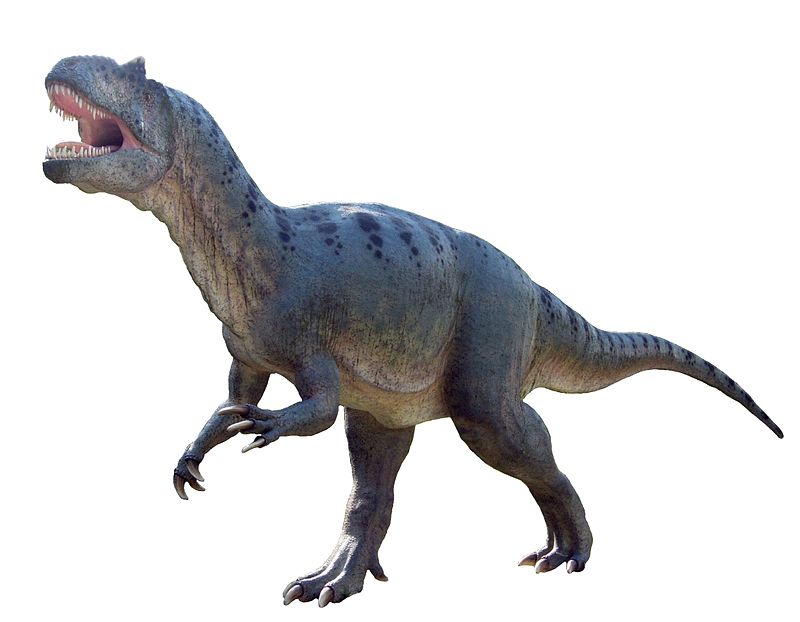
Via Wikimedia Commons- Indroda Fossil and Nature Park
Adding Shiny Chrome
Now, before we go further, I want to shift our attention to Chrome. Chrome is essentially that little something special that takes your mechanics from yahtzee to something a little bit more. They are additional decisions or hooks for players and often take the form of special rules or situational items. Only The Strong Survive has places for Chrome built into the core 4Ms, it is now a time for us to think about how to exploit them. First off, let me take a moment to identify the built in locations for some chrome. Then we can talk a bit about how to make chrome work.

I left space for chrome in the rules in three primary areas. Those areas are the Damage Track, Reaction successes, and in the Attacks section of the rules. How did I identify these areas for chrome? Well, the exact outcomes were not clearly determined in the 4Ms. We know a successful target number result on the Reaction die allows a reaction, but what kind of reaction? We know attacks can reduce the Damage track until a Dinosaur is dead but what happens when it is only injured? We talked about an attack doing damage by successes above the Defense and reduced by armor, but different Dinosaurs have different specialized attacks, what are they? As you can see, some gray area around results can allow for space to add Chrome.

So, now that we have identified opportunities for Chrome, let's talk a bit about how chrome should work. Ultimately, Chrome should be a result beyond the the basic mechanics, but still in alignment with the concept of the game. Typically, it does one of the following things:

  1. Provides an attack modification
  2. Allows a defense modification
  3. Perform some special or additional movement
  4. Improves or reduces abilities (In this case Instinct Dice, Armor, Speed, etc.)
  5. Allow some unique interaction with terrain
  6. Allow some special action not normally part of the rules

Now, chrome is a dangerous business. If you are not careful it can lead to If This/Then That rules which lead to confusion rather than interesting game play. Typically, chrome should be a balance of risking something versus a potential greater reward. For example, a special attack might have a higher target number to be successful but when it does potentially inflict more damage. It could provide a different advantage than just straight damage, like a push back or knock down. It is a chance to create a decision point for a player, and is another way to try to build in some Tactical Play. Try to use chrome sparingly and make the same general chrome apply to multiple units. This way you avoid chrome actually breaking your game either unit by unit or entirely.
Via Wikimedia Commons

Building the Allosaurus
One of the mantras I have been spouting off about during this whole series has been to do your research. I know almost nothing about the Allosaurus. As I have mentioned, I am not a paleontologist or scientist. My knowledge of Dinosaurs comes from my younger family members, the internet, and the MST 3k episode of The Beastof Hollow Mountain.


Yeah, so after that inspiring clip I decided to set out to make the stats for the fearsome Allosaurus.

Here are a couple things of note about Allosaurus from my research:
  • They are carnivores and predators
  • They are two-legged theropods
  • They have small frontal arms
  • They have a weaker lower jaw than alligators
  • Probably used their teeth in a hatchet like attack to tear flesh away
  • It is most likely they were lone hunters
  • They had small horns and ridges on their head
  • They may have been scavengers
  • Allosaurus was up to 15 feet tall, lived 28 years, and could run 21 MPH.
  • There is evidence of Stegosaurus and Allosaurus fighting each other!


There you go, now let's compare this to the our basic profile and start to put something together for “Big Al” for Only the Strong Survive.

Name: Allosaurus
Speed: Normal
  • Instinct Pool: 10
  • Attack Max: 8
  • Defense Max: 4
  • Reaction Max: 4
Armor: 1

Damage Track:
  • 4 Boxes for Light- Reaction Max reduced to 3
  • 3 Boxes for Medium- Reduce speed to Slow
  • 2 Boxes for Severe- Reduce armor 1 to 0
  • Dead

Reactions:
1 Success- Dinosaur can pivot as desired on the spot to reposition
2 Success- Dinosaur may choose to push back itself out of engagement range
3 Success- Dinosaur can attempt an immediate Body Block
4 Success- Dinosaur can attempt to make a short move

Attacks:
Bite Attack Front Arc TN: 4+ Special: None
Tail Whip Rear Arc TN: 6+ Special: None
Body Block Front Arc TN: 4+ Special: No damage, Push Back, Knock Down
Hatchet Bite Front Arc TN: 6+ Special: Tearing Attack

Push Back- Target Dinosaur is pushed back slow Distance
Knock Down- Target Dinosaur maybe knocked down if it fails to make any success on a Reaction test
Tearing- Dinosaurs with armor of 1 count as armor 0.

There we have our first Dinosaur combatant! All of that could fit nicely on a small card.

Via Wikimedia Commons- The Denver Museum of Nature and Science


Creating a Stegosaurus
I know even less about a Stegosaurus than I do about the Allosaurs since they weren't in an MST3K! Well, at least that I recall. I do know from my research on Allosaurus that the two were Jurassic time period enemies, so it makes sense to make an opponent for play testing the basic game rules.

So, let's see what we can find out about good old Stegosaurus:
  • Steggie's were herbivores
  • They were not very bright
  • We have no idea why it has plates
  • They were really good at eating low plants and ferns due to having cheeks and swallowing small rocks
  • Its back legs are longer than the front, so it moved slowly
  • It had a very weak bite, weaker than humans!

Now you know, and knowing is half the battle. The plates probably were not armor, but instead used to radiate heat or for display. However, I think they are more fun in this game as armor plates. I get to make the final call for Only the Strong Survive.

Name: Stegosaurus
Speed: Slow
  • Instinct Pool: 8
  • Attack Max: 6
  • Defense Max: 6
  • Reaction Max: 3
Armor: 3

Damage Track:
  • 4 Boxes for Light- Reduce armor 1 from 3 to 2
  • 2 Boxes for Medium- Instinct Pool is reduced by 1 to 7
  • 2 Box for Severe- Attack Max is reduced by 1 to 5
  • Dead

Reactions:
1 Success- Dinosaur can pivot as desired on the spot to reposition
2 Success- Dinosaur may choose to push back itself out of engagement range
3 Success- Dinosaur can attempt an immediate Body Block

Attacks:
Tail Whip Rear Arc TN: 4+ Special: Pierce
Body Block Front Arc TN: 4+ Special: No damage, Push Back, Knock Down
Tail Sweep Rear Arc TN: 6+ Special: Knock Down

Push Back- Target Dinosaur is pushed back slow Distance
Knock Down- Target Dinosaur maybe knocked down if it fails to make any success on a Reaction test
Pierce- Any Attack rolls of 6+ cause 2 damage instead of 1

There you go. We know have some combatants to play around with.

Conclusion
You can see how the previous work we did at each stage built on each point to allow us to build profiles for our units quickly and easily. However, once you have some profiles created, the real work is just beginning. Now, you have to start actually hitting the table and seeing how the units interact with each other in different combinations over and over again. This process will let you see where your basic model works, what chrome is too powerful, and other small items you will have to go back and tweak a bit. At this stage, you are looking for big time game breakers and flaws more than intimate balance.

The big rocks of the game are now done if you want a playable one-off game. Time to start getting some of this stuff written down someplace! The only elements left for a complete game are what I like to call the Value-Adds. We will discuss those in the next installment.

Monday, October 29, 2018

Wargame Design: Thinking Through Activation for your Game


Welcome as we progress through the process of creating Only the Strong Survive; a game of dinosaur combat.  In previous posts we have discussed how to flesh out the conceptof your game, build design goals, and use these to flesh out your 4Ms to create a skeleton of a game.  At this stage you have a very good concept of what you are trying to accomplish and how you intend to do it.  You could start doing some rudimentary play tests of the game system to see how it hangs together. 

We have not discussed a key element.  This element is possibly the most important component to creating tactical game play.  If the 4Ms are the skeleton of your game, this element is the muscle and sinew.  It holds the component pieces together as a whole.  It is the last element needed to create a playable game.  I also find it to be the most compelling feature of many game systems.  What is this sacred ingredient?  It is the Turn Sequence.  How and when models can act in relationship to each other. 
$10 at Wal-mart got me these and many more for testing

There are as many ways to handle activation as there are games to play.  Below are some basic ideas to get you started on the path of thinking about this mechanic:

1.       I-GO-U-GO- Basically, both players take turns and do all actions with their entire force.  One player does all their actions, and then the other player does all of their actions.  There are many famous games with this structure.  Contrary to popular belief, this method is not inherently wrong.  Like all mechanics there are advantages and disadvantages to this method. 
a.       Advantages- Easy to understand, simplicity
b.       Disadvantages- Can have down time, Opponent has few counters
c.       Examples: Warhammer 40K and Warhammer Fantasy Battle


2.       Alternating Activations- In this method, a model/unit is activated by a player, it completes its action, and then the opponent gets to do the same with their model/unit.  Play alternates back and forth until all models have been activated.
a.       Advantages- Players exchange play frequently to stay in the game 
b.       Disadvantages- Forces act disjointedly, react “in the moment”
c.       Examples: Dystopian Wars

3.       Activations by Phase- One player has all of their units/models perform one of their available actions such as move.  Once complete, the opposing player can then have all of his models/units complete the same action.  Once complete, the first player can then have all of his models/units perform the next action. 
a.       Advantages- Play goes back and forth, Units can coordinate actions
b.       Disadvantages- Can have downtime, Opponent can have limited response


4.       Activation Order- At some point, an order of who can activate when is established and then followed in a linear way.  For example, all units of a certain type can activate, then of another type can activate, and then a third type, until all units have performed an activation.  The order can be set in advance or fluid and changing, but there is a clear order of activation.
a.       Advantages- Used to differentiate unit/models, Play typically moves between players
b.       Disadvantages- Establishing or recalling proper order
c.       Examples: Dux Bellorum, The Games: Blood andSpectacle

5.       Act/React- A player can choose to activate or use a model/unit.  However, if certain criteria are met then the opponent player can try to activate or use one of their own models/units as a ‘reaction’ to what the acting player is doing.       
a.       Advantages- Leads to dynamic game play
b.       Disadvantages- Complex, mechanic heavy, not intuitive
c.       Examples: Infinity, Rogue Stars, Force-on-Force


6.       Push-Your-Luck- A model/unit that is active can continue to do stuff until they fail.  Then activation moves to a different model/unit OR the opponent can start activating their models/units. 
a.       Advantages- Forces player decision, Create friction
b.       Disadvantages- Artificial outcomes
c.       Examples: Blood Bowl, Black Powder

The above is just a flavor of the general styles out there.  In addition, there can be multiple small variations to the specific mechanic or combinations.  For example, the main mechanic maybe I-GO-U-GO with an Overwatch mechanic that allows an Act/React system to come into play, or a resource that is spent in order to interrupt.  Again, this is where research and being familiar with a wide variety of game systems and mechanics comes in handy.  You can see exactly how other designers have tackled similar challenges to the ones you are facing.

As you consider the activation method or turn sequence for your game, it is a good idea to refer back to your Design Goals.  In the case of our dinosaur fighting game, Only the Strong Survive; they were:

1.                   Interesting battles between Dinosaurs 1-on-1 or in very small groups.
2.                   Gameplay that flows quickly and easily between players
3.                   Lots of decision making for the player
4.                   Clear differentiators between Dino types
5.                   Scale and model agnostic
6.                   Combat that flows freely, not locking you in
7.                   Positioning is key

Reading the design goals, I can immediately eliminate some of the options from our list.  Activation by Phase and I-GO-U-GO do not seem to be a good fit.  However, I-Go-U-Go could work with small model count games; I am going to steer away from it for now.  Those typically have some longer wait times as players complete their phases.  My design goals specifically call out quickly flowing game play and free flowing combat. 

Alternating Activation and Activation Order seem like they could work fine.  However, I also want to force decisions on the player.  The key decision in these activation methods is simply who to activate when.  If it is a 1-on-1 fight, there will be no decision making using these methods.  On the other hand, how they fit into an activation method is a good way to distinguish between dino types.  However, I am going to eliminate those from our final list as well.  The positives do not outweigh the negatives right now.

This leaves us with Act/React and Push-Your-Luck.  I have successfully used Push-Your-Luck mechanics before in Combat! Starring Vic Murrow.  It allows for models to differentiate themselves and potentially “chain” there efforts together, but a successful chain could disenfranchise an opponent’s ability to act.  I have also seen Push-Your-Luck mechanics lead to some bizarre outcomes in games like Black Powder, Hail Ceasar, and Lion Rampant that have been off-putting to some reviewers and players. 


When I take a closer look at Act/React in games like Arena Rex it seems like a strong fit.  Arena Rex is also a model-vs-model (or small group) melee fight.  There, certain actions allow clearly defined reactions, and different fighters can have unique reactions for differentiation.  This seems to fit what I am trying to accomplish pretty closely.  On the other hand, in games like Infinity or Rogue Stars I have seen it lead to one model doing all the heavy lifting while the rest of the team just sits and cheers the biggest, baddest model on. 

After reviewing my design goals and the skeleton of the game I have put together so far, I have decided on trying to build some sort of Act/React system.  Obviously, I will need to build in some sort of limiting factors so players will need to “manage” their dinosaurs and their ability to react.  The exact nature of this mechanic is not clear yet, but it could simply be a dice pool that reduces as they use it, and a success indicates they can react and no successes indicate they can not.  Then the number of successes could dictate the list of available reactions.  The more successes the more aggressive the reaction?   These reactions could also vary by dinosaur with more nimble and reactive dinos able to do more aggressive reactions, while bigger, slower dinos might need more successes to do something less aggressive.

Now, with the skeleton and muscles of the basic game in place, it is time to move onto the next steps. With the basic elements in mind, you need to start putting together some basic profiles for the units in your game. You can’t build a unit profile, until you have an idea of how the game is going to work. If you go back and review the post on fleshing out the 4Ms and combine it with this post, you can see a shadow of the profiles being created. Next time, we will look at the process of building two Dinosaur profiles for Only the Strong Survive based on the core mechanics we have discussed here.